The recovery position: step-by-step first aid
The recovery position keeps the airway open in someone who is breathing but not responding, and lets any vomit drain away. If you have said the steps out loud and rolled a real person onto their side, you won't freeze when it matters. This is the practice drill from the book; a real first aid course is still the best next step.
The short answer
Check Danger, Response, Airway, Breathing. If they are breathing but not responding, call 999, then: near arm out at a right angle, back of the far hand against their cheek, far knee up, pull the knee to roll them towards you, tilt the head back and lift the chin. Keep checking their breathing. If they stop breathing normally, roll them onto their back and start CPR.
First: DR ABC and the 999 call
- Check for Danger to you and to them.
- Check for a Response: speak loudly and tap their shoulders.
- Open the Airway: tilt the head back and lift the chin.
- Check Breathing for up to 10 seconds.
- Call 999. Say "Ambulance", then your address, then what happened. Say the address slowly.
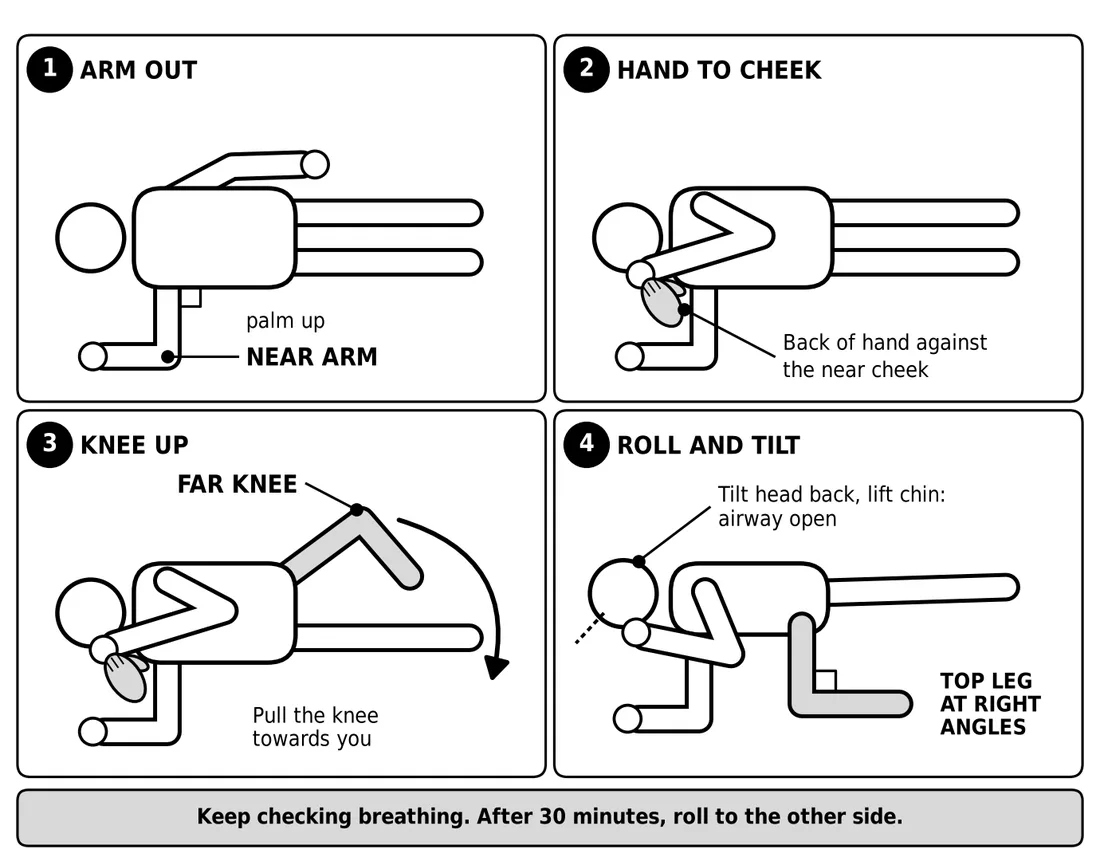
The recovery position, step by step
- Kneel beside them and straighten their legs. Take off their glasses and remove bulky items from their pockets.
- Place the arm nearest you out at a right angle to their body, elbow bent, palm up.
- Bring the far arm across their chest and hold the back of that hand against the cheek nearest you.
- With your other hand, bend their far knee up so the foot is flat on the floor.
- Keeping the hand pressed to their cheek, pull the far knee towards you so they roll onto their side. Bend the top leg so the hip and knee are at right angles.
- Tilt the head back slightly and lift the chin so the airway stays open. Adjust the hand under the cheek if needed.
- Keep checking their breathing until help arrives. If they stay in this position for 30 minutes, roll them onto the other side.
Safety: call 999 as soon as you find someone unresponsive. If they stop breathing normally at any point, roll them onto their back and start CPR. If you suspect a spinal injury, follow the call handler's instructions on moving them.
Practise at home
- Ask a willing adult or older child to be the casualty on a soft floor, and walk through DR ABC out loud.
- Swap roles. Being rolled shows you how heavy and floppy an unresponsive person is, and why the knee does the work, not your back.
- Even young children can learn to call 999, give their address and say "my mum won't wake up". Practise with a switched-off phone, and make sure they know 999 is only for real emergencies.
Questions people ask
When should you put someone in the recovery position?
When they are unresponsive but breathing normally. It keeps the airway open and lets vomit drain. If they are not breathing normally, call 999 and start CPR instead.
Which side do you put someone in the recovery position?
You roll them towards you, onto their side. If they stay in the recovery position for 30 minutes, roll them onto the other side.
What does DR ABC stand for?
Danger, Response, Airway, Breathing: the checks of the primary survey, done in that order before you decide what first aid is needed.
What if they stop breathing in the recovery position?
Roll them onto their back and start CPR, and make sure an ambulance is on its way by calling 999.
Can you use the recovery position with a suspected spinal injury?
Follow the 999 call handler's instructions on moving them.
Sources
Checked against these pages in November 2026. Advice and the law can change, so the official page always has the final word.