How much food to stockpile per person (UK)
A good store cupboard turns snow, illness or a tight month into an ordinary week of slightly odd dinners. Start with a number, then think in meals: the store should let you cook six or seven of your usual dinners from cupboard ingredients alone.
The short answer
For two weeks, one adult: about 5-6 kg of starch (pasta, rice, oats, flour, crackers), 10-14 tins or packs of protein, 14-20 tins or packs of fruit and veg and 1-2 kg of fats and treats. Multiply by the number of people and knock a little off for young children. Built a few items a week from own-brand food, it typically costs £40-70 per adult at 2026 prices.
A rough two-week guide for one adult
| Food group | Rough amount | Examples |
|---|---|---|
| Starch | 5-6 kg | Pasta, rice, oats, flour, crackers |
| Protein | 10-14 tins or packs | Beans, lentils, tuna, chicken, peanut butter |
| Fruit and veg | 14-20 tins or packs | Tomatoes, sweetcorn, peas, fruit in juice |
| Fats and treats | 1-2 kg | Oil, long-life milk, chocolate, biscuits |
As a check, the NHS guide is about 2,000 kcal a day for an average woman and 2,500 kcal for an average man. Children need less, teenagers can need surprisingly more.
The three levels
- Three days: food that needs no cooking. Tinned fish, crackers, peanut butter, cereal bars, long-life milk, tinned fruit.
- Two weeks: a working store cupboard you cook from every week, plus a safe way to heat food without mains power.
- Three months: the same cupboard, deeper. More rice, pasta, oats, flour, dried pulses and oil, the cheapest calories in any supermarket.
Build it in weekly steps
- Write down seven dinners your household eats happily that can be made from tins, packets and dry goods. Cooked twice, that is fourteen.
- Add one cupboard breakfast, such as porridge with long-life milk, and one simple lunch, such as soup and crackers.
- List every ingredient for each meal, total it and compare with the table above. Fill any gap with rice, pasta and oats.
- Add the non-food items: a manual tin opener, salt, stock cubes, oil, tea or coffee, and water for cooking pasta and rice.
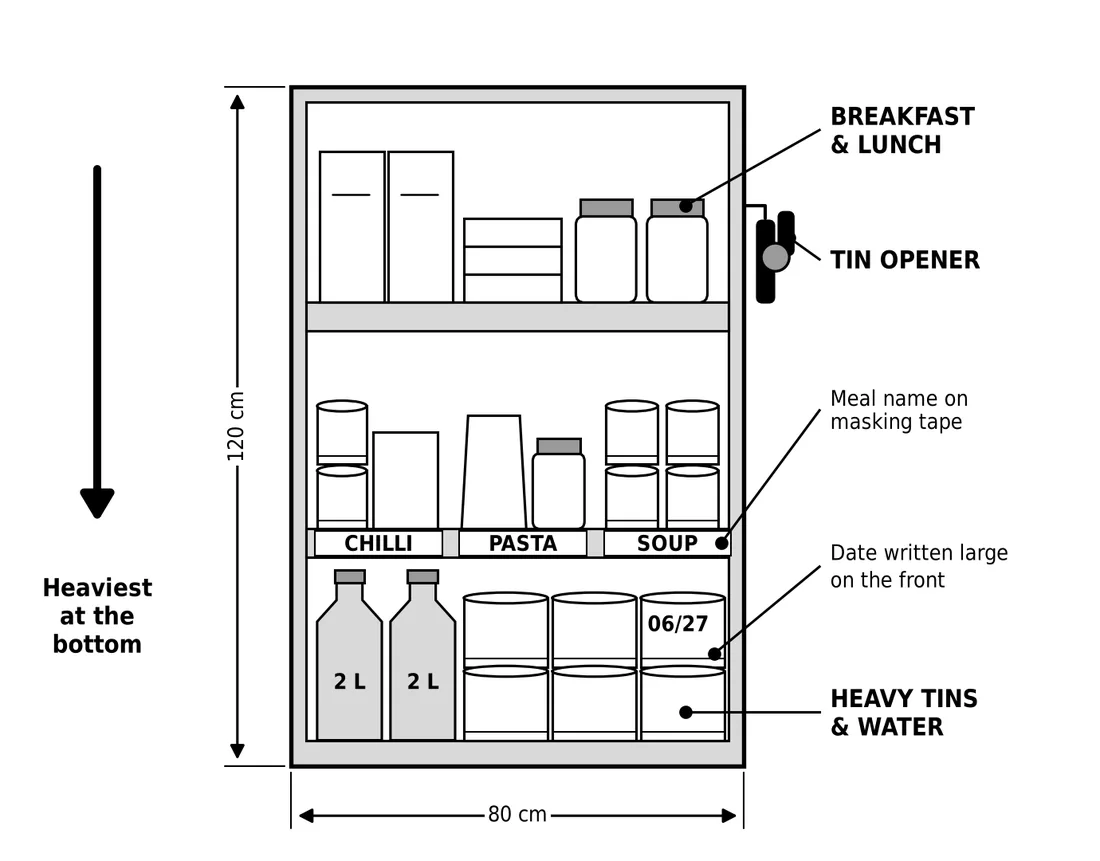
- Split the list into six to eight weekly chunks, about £5-10 extra per shop, and group the shelf by meal, not by type.
Keep it in date
- Write the month and year large on the front of every item, and line each row up soonest date at the front, new stock at the back: first in, first out.
- Once a month, anything within three months of its date goes into this week's meals.
- A best before date is about quality: past it, food is usually safe but may not be at its best. A use-by date is about safety: after it, don't eat, cook or freeze the food.
- Bin anything in a bulging, leaking or badly dented tin.
- Keep the store cool, dry and dark. A garage or shed is a poor choice: temperatures swing, damp creeps in and mice find it first.
Questions people ask
How much food should I stockpile per person in the UK?
For two weeks, one adult needs roughly 5-6 kg of starch, 10-14 tins or packs of protein, 14-20 tins or packs of fruit and veg and 1-2 kg of fats and treats. Multiply by the number of people.
What food should I stockpile?
Only what you already eat: ingredients for seven of your usual dinners from tins, packets and dry goods, plus a cupboard breakfast and lunch. Tinned beans are better than dried for the short-term store, because dried beans need a lot of water and long cooking.
How much does a two-week food store cost?
Built a few items a week from own-brand food, a two-week store for one adult typically costs £40-70 at 2026 prices, and you eat it anyway.
Is food safe after the best before date?
Usually, yes: best before is about quality. Use-by is about safety: don't eat, cook or freeze food after its use-by date.
Where should I keep a food stockpile?
Somewhere cool, dry and dark indoors: a kitchen cupboard, a crate under the stairs or boxes under a bed. Avoid garages and sheds.
Sources
Checked against these pages in November 2026. Advice and the law can change, so the official page always has the final word.