How to keep warm in a power cut (UK)
Homes get cold very quickly when the heating goes off. Keeping people and one room warm is far easier than trying to heat a whole house without power, and almost everything you need is already in the house. This is the warm room project from the book, with the safety rules that matter most.
The short answer
Pick one small room with few outside walls and windows, block draughts, hang a blanket over the door and bring everyone's bedding in. Fill flasks with boiling water while you still have power, dress in thin layers plus a hat and socks, and check on neighbours. Never use a barbecue, camping stove, patio heater or generator indoors: carbon monoxide can kill. Report the power cut on 105.
You need
- One room: ideally a small living room with few outside walls and windows
- A heavy curtain or blanket, plus 4-6 hooks or drawing pins, to hang over the door
- Draught excluders or rolled towels
- A sleeping bag or duvet for each person, plus spare blankets
- 2 vacuum flasks of about 1 litre each, and hot water bottles with covers
- A battery thermometer (about £3-5)
- Hats, socks and thin thermal layers for everyone
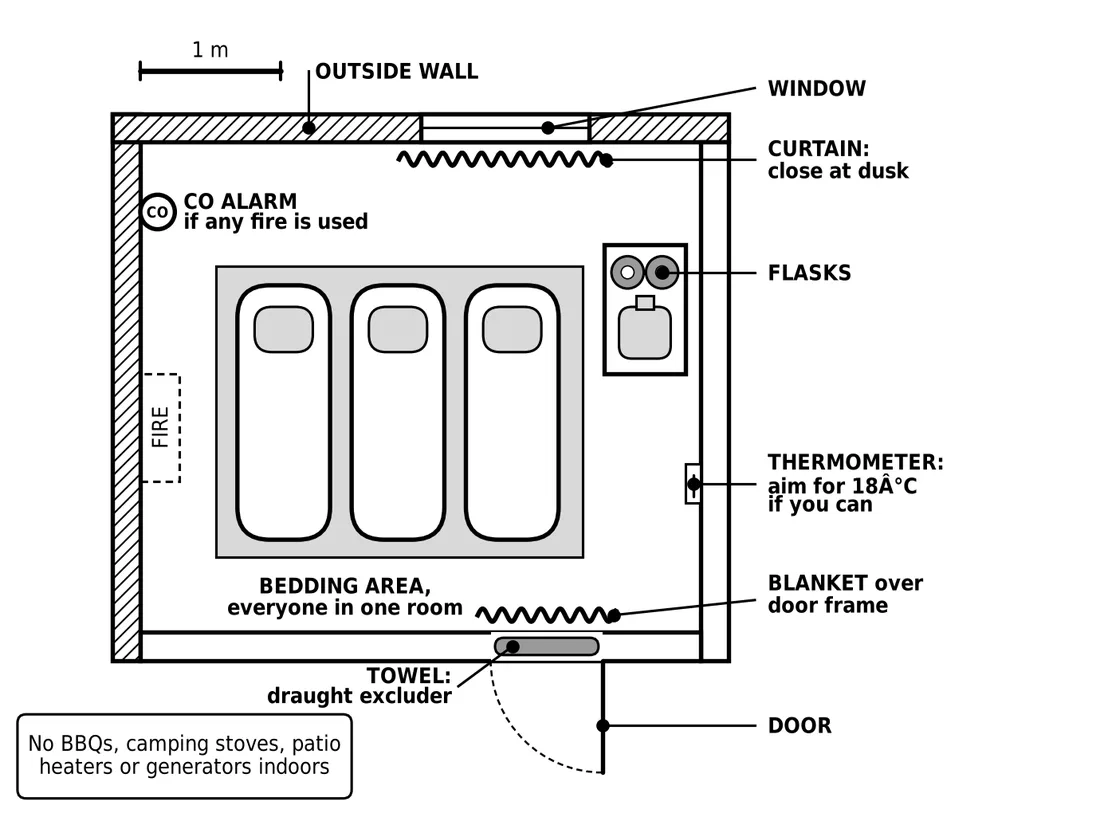
Set up the warm room
- Choose the room now, not in the dark: the one with the fewest outside walls and windows. If it has a fire or wood burner you will use, it needs a working carbon monoxide alarm and a swept chimney.
- Cut the draughts: rolled towels along the bottom of doors, curtains closed at dusk, and a blanket hung over the door frame.
- Bring everyone's bedding into this room. Everybody sleeps and eats there; bodies and pets are heat sources too.
- When a storm or cold snap is forecast, fill the flasks with boiling water and keep them topped up while you still have power. Hot drinks and hot water bottles then last into the night.
- Dress in several thin layers, plus a hat and socks, rather than one thick jumper.
- Put the thermometer at sitting height. The NHS suggests keeping rooms you use regularly at 18°C or more, especially if you have a health condition. In a long power cut you may not get there, so concentrate on keeping people warm: layers, bedding, hot drinks and moving about.
- Keep bedroom windows closed at night.
- Check on neighbours, especially older people living alone. Ask if they need anything and whether they have food for a few days.
Never
- Never bring a barbecue, camping stove, patio heater or generator into a house, garage, shed, porch, caravan or tent. Smouldering charcoal from a "finished" barbecue still gives off carbon monoxide.
- Never use a heater that is not made for indoor use. Use indoor heaters exactly as the instructions say, at least 1 metre from people and furniture, with a CO alarm in the room.
- Never use a hot water bottle without a cover, or fill it other than as its instructions say.
Carbon monoxide: the quiet hazard
You cannot see, smell or taste carbon monoxide. The symptoms look like flu or food poisoning: headaches, dizziness, breathlessness, nausea, tiredness. If everyone in the same room feels ill at once, or you feel better outside, think CO. After Storm Eunice in 2022, Devon and Somerset Fire and Rescue Service reported a worrying rise in carbon monoxide incidents in areas without power.
- Get everyone, pets included, out into fresh air. Open doors and windows on your way if it is safe.
- Turn off fuel-burning appliances if you can do it quickly.
- For gas, call the Gas Emergency line on 0800 111 999.
- If anyone feels unwell, call 999 and say you suspect carbon monoxide. Do not go back in until you are told it is safe.
Practise once
Hold a "power cut night" in the warm room: mains lights off, torches on, board games, cocoa from the flask and everyone sleeping in one room. Children who have practised it as an adventure stay calmer when it is real. Use torches rather than candles.
Questions people ask
How do I keep warm in a power cut without heating?
Use one small room with few outside walls, block draughts, bring all the bedding in, dress in thin layers with a hat and socks, and use hot drinks and covered hot water bottles from flasks you filled before the power went.
Can I use a camping stove or barbecue indoors to keep warm?
No, never. Barbecues, camping stoves, patio heaters and generators give off carbon monoxide, which you cannot see or smell and which can kill. Use them outdoors only.
What temperature should my room be?
The NHS suggests keeping rooms you use regularly at 18°C or more, especially if you have a health condition. In a long power cut you may not reach it, so focus on keeping people warm.
Who do I call in a power cut?
Call 105 to report a power cut in England, Scotland and Wales, or 03457 643 643 in Northern Ireland. Call 999 if anyone is in danger.
What are the signs of carbon monoxide poisoning?
Headaches, dizziness, breathlessness, nausea and vomiting, tiredness and drowsiness. If several people feel ill at once, or feel better outside, get out into fresh air and call for help.
Sources
Checked against these pages in November 2026. Advice and the law can change, so the official page always has the final word.